Tesla's MegaPack Charger: Revolutionizing EV Charging with Portable Supercharging Stations
Electric vehicle (EV) charging can sometimes feel like a daunting task, especially during peak travel times when charging stations are packed. However, Tesla, a leader in the EV industry, has found a solution to this problem. With its extensive Supercharger network, Tesla has made long-distance EV travel simpler by integrating fast-charging infrastructure directly with its car’s navigation and infotainment systems, providing drivers with real-time data on charging needs, locations, and expected charging speeds. This seamless experience is one of the biggest reasons why Tesla owners are so loyal.
But even for Tesla drivers, charging stations can become congested during busy holidays or travel seasons, leading to longer wait times. As the number of EV owners grows, so does the demand for more charging stations. To address this, Tesla has introduced a new solution: the MegaPack Charger.
What Is the Tesla MegaPack Charger?
The MegaPack Charger is a portable Supercharger station that can be deployed almost anywhere, providing flexibility to address temporary charging congestion. This innovative charging solution is installed on a semi-trailer, making it highly portable and easy to set up wherever additional charging capacity is needed. The charger is equipped with eight V3 Supercharger units, each capable of delivering 250 kW of power, enough to charge up to eight electric vehicles simultaneously.
Each MegaPack Charger comes with a built-in battery storage system that can store up to 3 MWh of energy. This is enough to charge around 75 electric vehicles. Tesla's innovative solution to temporary charging bottlenecks means that, when local grid electricity demand is low (such as overnight), the MegaPack can be recharged and be ready for use the next day, providing an efficient way to ensure charging stations are never overwhelmed.
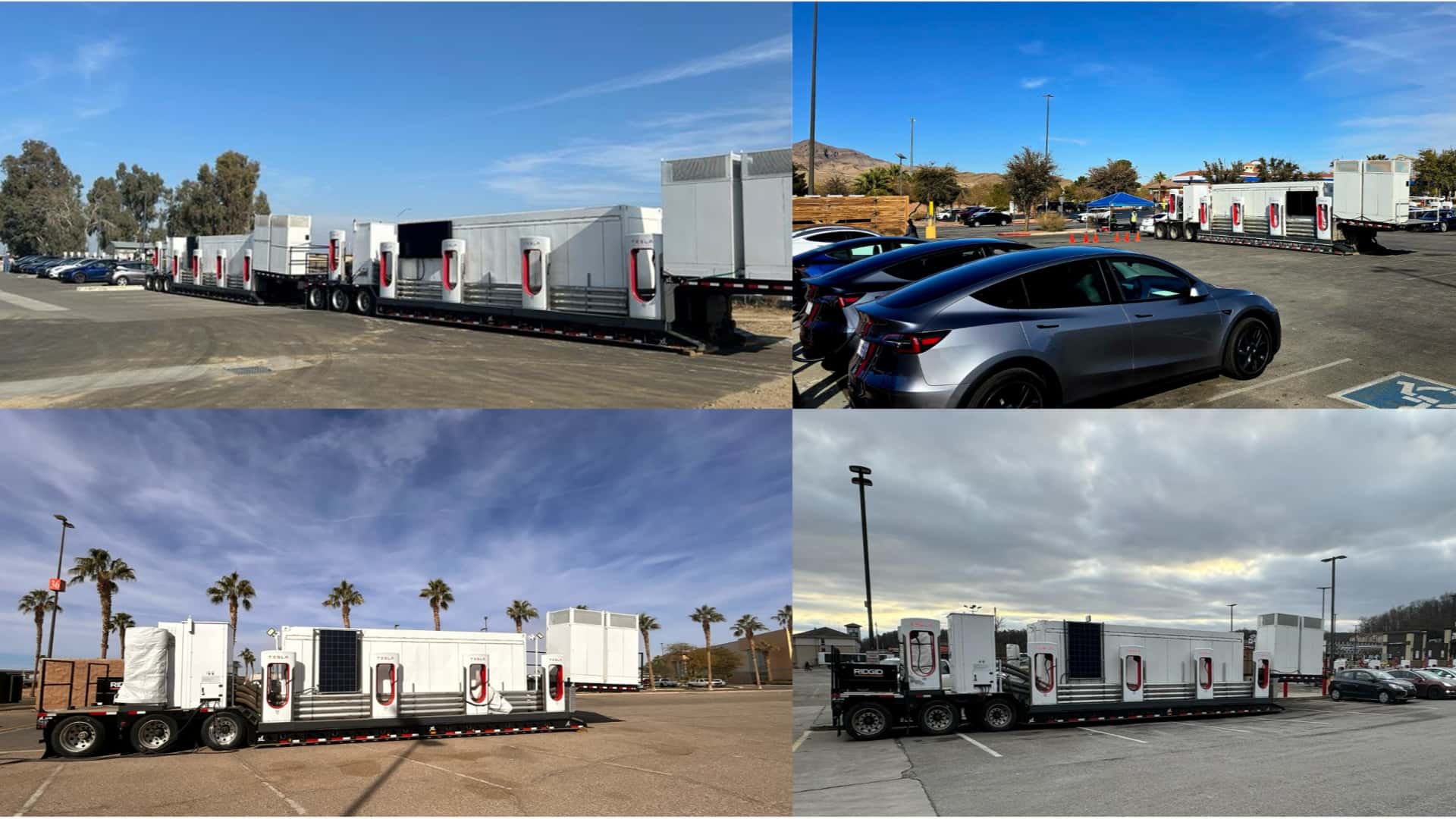
The Tesla MegaPack Charger and Its Real-Time Connectivity
One of the standout features of Tesla’s MegaPack Charger is its connectivity. These mobile charging stations are powered by SpaceX’s Starlink service, enabling real-time data transmission and remote management. This allows Tesla to deploy MegaPack Chargers in areas affected by events like temporary traffic surges or natural disasters, such as hurricanes, when additional charging infrastructure is needed.
According to Tesla's charging business manager, this system has already been deployed in several key locations. For instance, during the recent holiday season, four MegaPack Chargers were strategically placed across the U.S.—two in California, one in Nevada, and another in Ohio. These chargers are fully integrated into Tesla’s navigation system, which means drivers can see in real-time how many charging stations are occupied and how many are available, making it easy for them to plan their routes accordingly.
Tesla’s MegaPack Charger vs. China’s Mobile Charging Stations
While Tesla's MegaPack Charger is an impressive solution for handling congestion at Supercharger stations, China has already implemented a similar concept with its "mobile charging stations." These mobile charging units, launched by various Chinese companies at the end of 2023, are designed to address charging difficulties during peak travel periods, such as during national holidays.
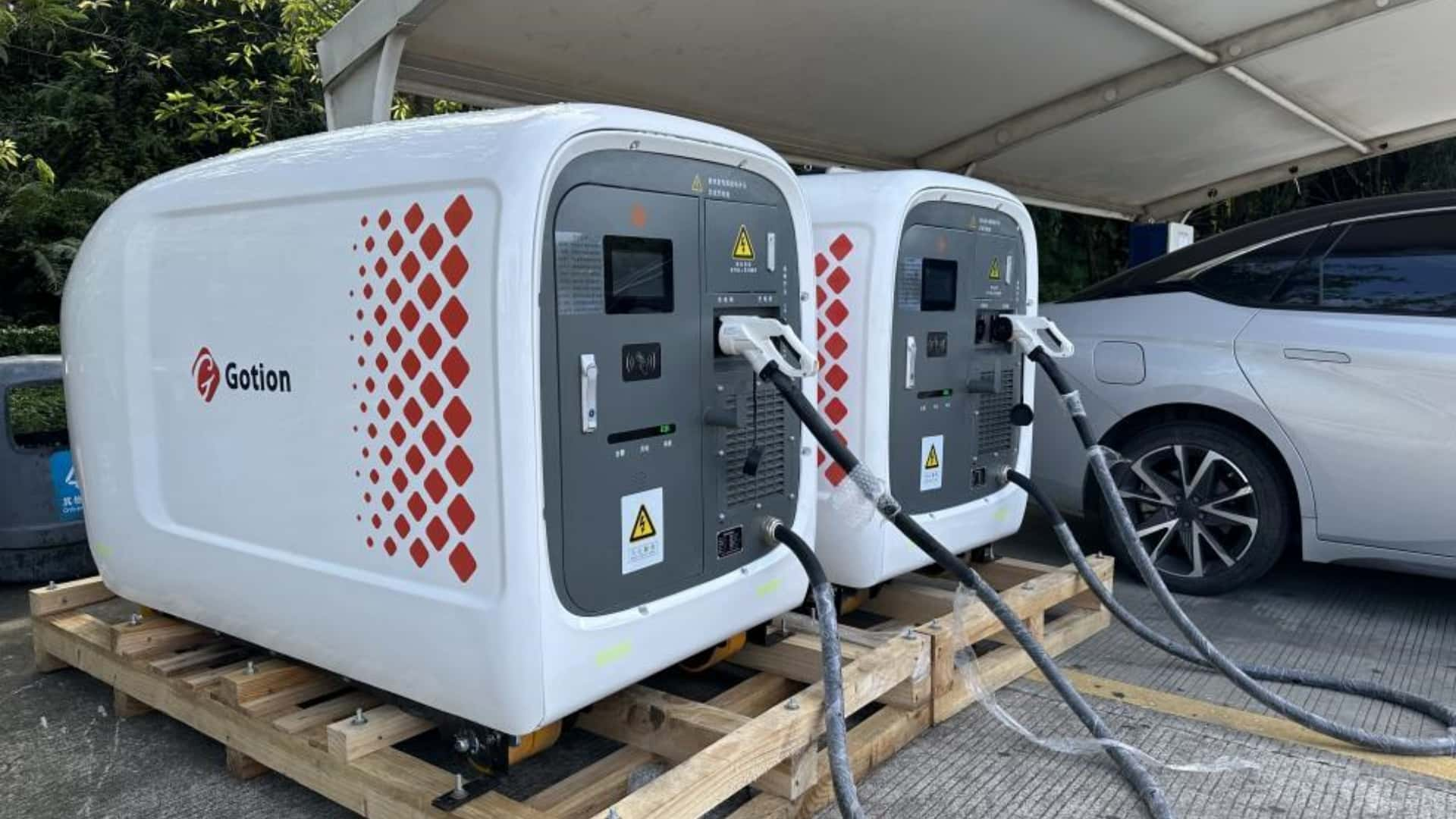
These mobile chargers, which can be deployed at different highway service areas, are capable of charging EVs on the go, offering convenience and efficiency. With charging power of up to 80 kW, these mobile units provide an easy alternative for EV owners, especially in high-demand areas where fixed charging stations may be occupied. This setup has been particularly beneficial in reducing wait times during busy periods, with many drivers reporting up to 80% charge within 30 minutes.
For instance, during the peak traffic periods of China’s "Double Holidays," highway service areas like Guanghe Expressway saw the introduction of "tidal" charging services. This service involves strategically placing mobile charging units based on the EV distribution throughout the day, ensuring smooth and efficient charging. With the help of the Baidu Maps app, drivers are notified of available mobile charging units, helping to alleviate the issue of long wait times for charging.
Future of EV Charging: Portable Solutions and Expanding Networks
The introduction of Tesla’s MegaPack Charger and China’s mobile charging stations signals a new era in EV infrastructure. As more EVs hit the road, innovative charging solutions like these will become essential in meeting the growing demand. With the ability to deploy mobile charging units quickly and efficiently, these solutions are setting the stage for a more flexible and accessible EV charging experience.
Tesla’s efforts to expand its Supercharger network with portable, battery-equipped chargers offer a glimpse into the future of EV infrastructure—where charging is no longer limited to fixed stations but can be deployed dynamically to meet real-time demand. As the adoption of electric vehicles continues to rise, this type of innovation will be key in ensuring that EV owners have access to reliable, fast, and convenient charging options no matter where they are.